
How Much Protein Per Day Do You Need? By Weight, Goal and Age
The baseline is 0.8 g of protein per kg of body weight. See how much protein per day fits weight loss, muscle gain and older age, with a table by weight.
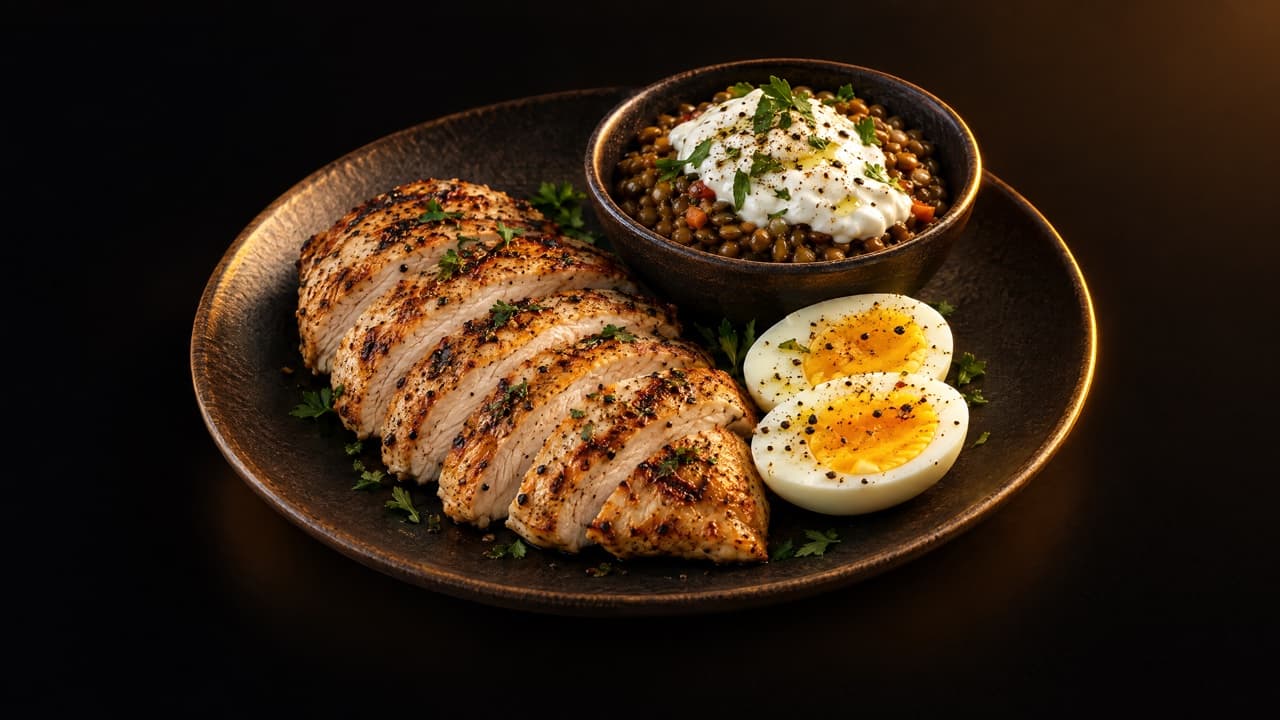
For most healthy adults the minimum is 0.8 g of protein per kilogram of body weight per day (about 0.36 g per pound), the Recommended Dietary Allowance set by the US National Academies. People who exercise regularly, are trying to lose fat while keeping muscle, or are older usually do better with more: roughly 1.0–2.0 g/kg, depending on the goal. Spread it over the day, about 20–40 g per meal.
This is general information, not medical advice. If you have kidney disease, diabetes or another medical condition, are pregnant, or follow a prescribed diet, ask your doctor or a registered dietitian what's right for you.
Protein per day by body weight
| Body weight | Baseline (0.8 g/kg) | Active or losing weight (1.4–2.0 g/kg) |
|---|---|---|
| 50 kg / 110 lb | 40 g | 70–100 g |
| 60 kg / 132 lb | 48 g | 84–120 g |
| 70 kg / 154 lb | 56 g | 98–140 g |
| 80 kg / 176 lb | 64 g | 112–160 g |
| 90 kg / 198 lb | 72 g | 126–180 g |
| 100 kg / 220 lb | 80 g | 140–200 g |
If you carry a lot of extra weight, many dietitians calculate protein from a goal or adjusted body weight instead of current weight, because fat tissue needs little protein. Treat the right-hand column as an upper range, not a target to force.
Where the numbers come from
- 0.8 g/kg is the RDA for adults in the Dietary Reference Intakes of the National Academies. It's set to cover the needs of almost all healthy adults, so it's a floor rather than an optimum for active people.
- The same report puts the acceptable range for protein at 10–35% of daily calories.
- The International Society of Sports Nutrition's position stand on protein and exercise recommends 1.4–2.0 g/kg per day for most exercising people, and about 0.25 g/kg (or 20–40 g) per meal.
- For older adults, the PROT-AGE expert group recommends 1.0–1.2 g/kg per day to help preserve muscle, more for active older people.
How much protein to lose weight
When you eat fewer calories than you burn, the body loses some muscle along with fat. A higher protein intake, combined with strength training, helps keep more of that muscle, and protein tends to keep you full longer than the same calories from refined carbohydrates. Within the ranges above, people in a calorie deficit usually aim for the upper half (around 1.6–2.0 g/kg of goal weight).
How much protein to build muscle
Muscle gain needs three things: progressive strength training, enough total calories and enough protein. Around 1.6 g/kg per day captures most of the benefit for most people; going much higher rarely adds muscle and mostly replaces other foods. Consistency across weeks matters more than any single shake after a workout.
How to spread protein across the day
- Put a protein food in every meal: eggs or yogurt at breakfast, fish, chicken, tofu or beans at lunch and dinner.
- Aim for about 20–40 g per meal rather than one huge serving at night.
- Use snacks to fill gaps: cottage cheese, edamame, a glass of milk or soy milk.
- Check labels. Protein is listed in grams per serving; our guide to counting macros shows how to read a nutrition label.

A quick estimate without a scale: a portion of meat or fish the size and thickness of your palm is about 100 g cooked, which is roughly 20–30 g of protein. Our guide to estimating portions without a scale has more hand-size tricks.
Foods that make it easy
Lean poultry, fish, eggs, Greek yogurt, cottage cheese, tofu, tempeh, lentils and beans give a lot of protein per calorie. See our list of low-calorie high-protein foods for numbers per 100 g.
Track it without spreadsheets
Counting protein by hand gets old fast. Bear Bite reads calories, protein, carbs and fat from a photo of your meal, sets daily targets from your height, weight and goal, and shows how close you are during the day. The numbers are estimates, so treat them as a guide and adjust portions when you know better.
FAQ
Can you eat too much protein?
For healthy people, intakes up to about 2 g/kg per day are generally considered safe in studies of active adults. People with kidney disease need individual advice from a doctor.
Does protein powder count?
Yes. It's food like any other: count its grams toward your daily total. It's convenient, not necessary.
How much protein is in an egg?
A large egg has about 6 g of protein, most of it split between the white and the yolk.
Keep reading
 Bear Bite••4 min read
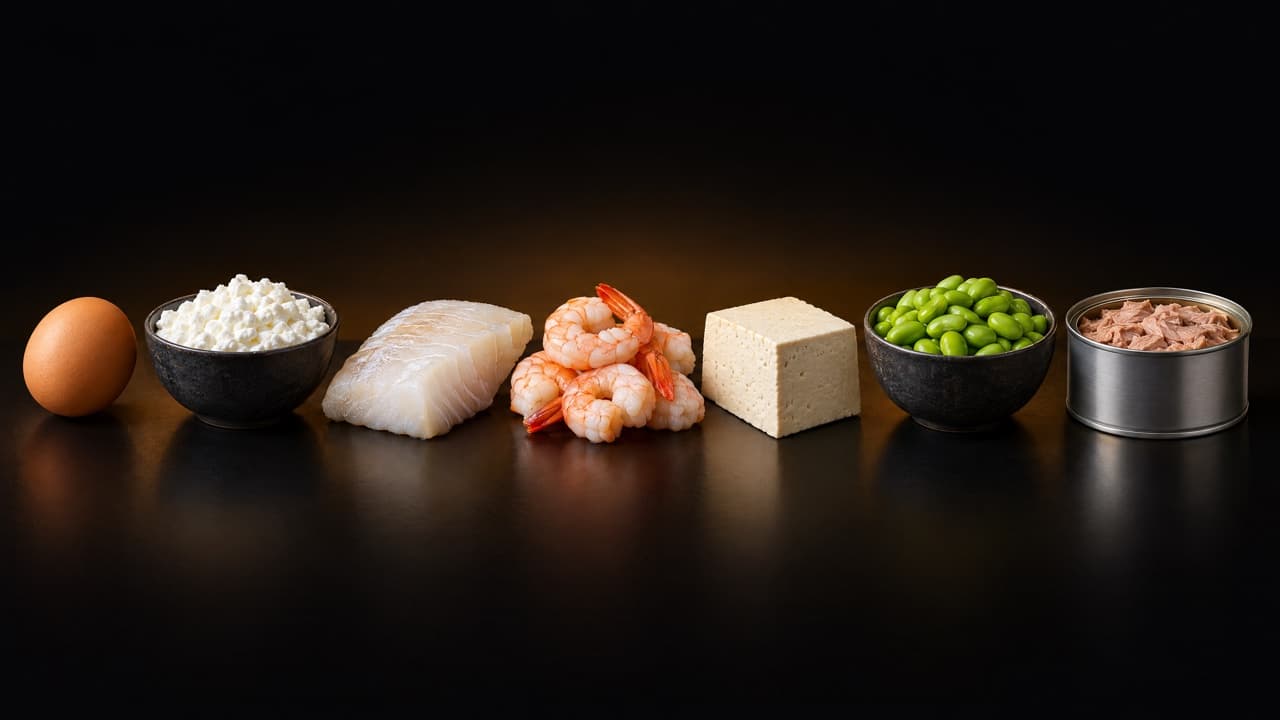
Low-Calorie High-Protein Foods: A Table of 15 Easy Picks
Fifteen foods with the most protein per calorie, from chicken and white fish to Greek yogurt, tofu and lentils, with grams per 100 g and simple meal ideas.
 Bear Bite••6 min read
How to Count Macros: A Beginner's Guide to Protein, Carbs and Fat
What protein, carbs and fat are, how many calories each gram provides, how to read macros on a food label, and how to track them without obsessing.
 Bear Bite••3 min read
How to Keep a Food Diary Habit Past Week Two
Most people stop logging meals within two weeks. Here's how to make calorie tracking small enough to survive busy days, travel and the occasional pizza night.