
12-String Guitar Tuning: Octave Pairs, Standard and D Tuning
How a 12-string guitar is tuned: six pairs in standard E A D G B E, octave strings on the lower four pairs, unison on the top two, and why many tune down.

A 12-string guitar is tuned like a 6-string, E A D G B E, but every note is a pair of strings. On the four lower pairs (E, A, D, G) the second string is tuned one octave higher; on the two top pairs (B, E) both strings are tuned to the same note. Tune the main (thicker) string of each pair first, then its partner, and check that each pair sounds like one ringing note.
Standard 12-string tuning
| Pair | Main string | Partner string |
|---|---|---|
| 6th (lowest) | E2 | E3 (octave higher) |
| 5th | A2 | A3 (octave higher) |
| 4th | D3 | D4 (octave higher) |
| 3rd | G3 | G4 (octave higher) |
| 2nd | B3 | B3 (unison) |
| 1st | E4 | E4 (unison) |
The high G4 string on the 3rd pair is the thinnest and most fragile string on the guitar. Bring it up to pitch slowly and never overshoot.
How to tune a 12-string step by step
- Open Struno and pick the 12-string guitar mode for the main notes, or use chromatic mode.
- Tune the six main strings first, low E to high E, picking only the main string of each pair.
- Switch to chromatic mode and tune each partner: E3, A3, D4, G4 for the octave strings, then B3 and E4 for the unison strings.
- Strum each pair alone. If it "wobbles", the partner is slightly off; adjust it until the beating stops.
- Do a second full pass. Twelve strings put a lot of tension on the neck, so the first strings drift while you tune the last ones.

Why many players tune a 12-string down
Twelve strings at standard pitch put noticeably more total tension on the neck than six. Many players tune the whole guitar down a whole step (D G C F A D, often called D tuning) or a half step, and use a capo when they need standard pitch. Check what the manufacturer recommends for your model; older and lighter-built 12-strings are often meant to be tuned down.
Tips for keeping it in tune
- Change strings one pair at a time so the neck doesn't lose all tension at once.
- New strings stretch more on a 12-string; retune several times on the first day.
- Tune the octave partners against the main string by ear at the end: an octave sounds smooth when it's right.
- If chords sound out of tune higher up the neck while open strings are fine, intonation may need a setup.
Related tunings
Most open and alternate tunings work on a 12-string too; tune the octave partners an octave above whatever note the main string goes to. See alternate guitar tunings, and our guide on how to tune a guitar for the basics.
FAQ
Are 12-string guitars harder to tune?
They take about twice as long, and the octave strings need care, but the method is the same as a 6-string.
Why are the B and E strings not in octaves?
An octave above the high B and E would need extremely thin strings at very high tension that break easily, so the top two pairs are doubled in unison.
Can I use a 6-string tuner for a 12-string?
For the main strings, yes. For the octave partners, use a chromatic tuner, which shows any note including E3, A3, D4 and G4.
Keep reading
 Struno••3 min read
7-String Guitar Tuning: Standard B Tuning, Drop A and How to Tune
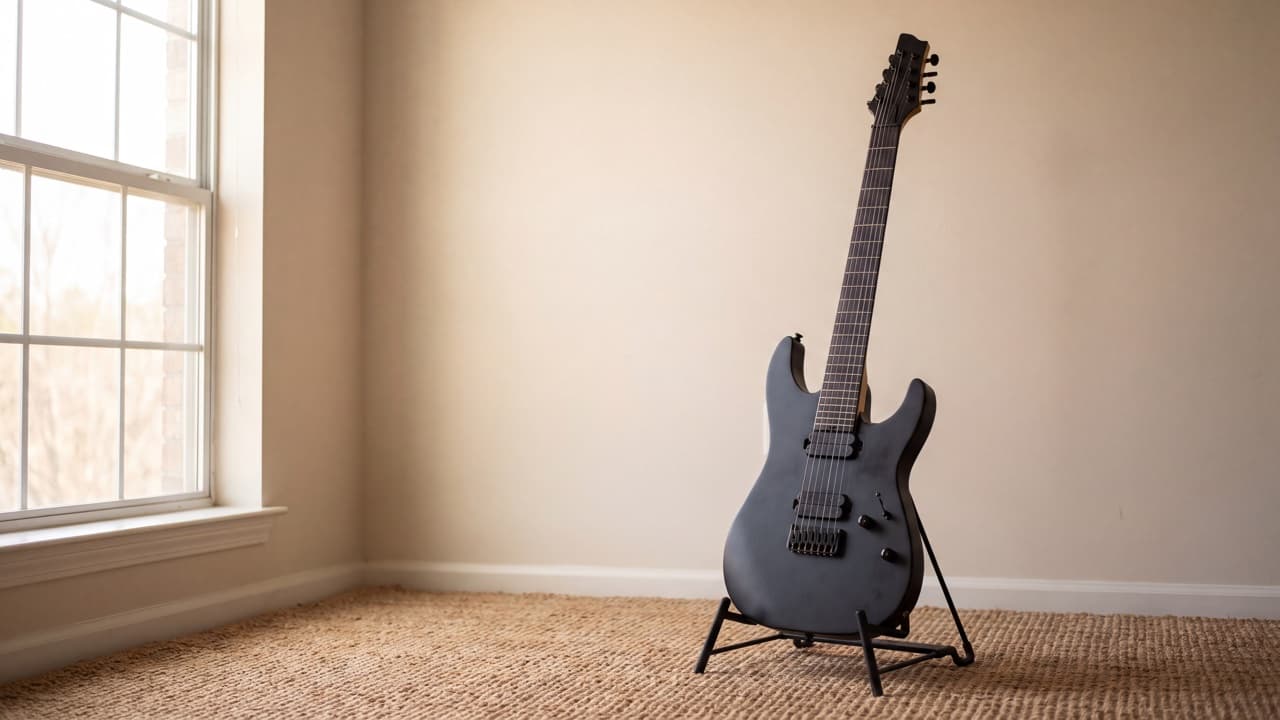
Standard 7-string guitar tuning is B E A D G B E: a low B below the usual six. How to tune it, drop A for heavier riffs, and tips for the thick low string.
 Struno••4 min read
Bass Guitar Tuning: Standard EADG, 5-String and Drop D
How to tune a 4-string bass to standard E A D G, add the low B on a 5-string, and switch to drop D or half step down, with a tuner app or by ear.
 Struno••5 min read
How to Tune a Guitar with a Chromatic Tuner: Standard and Drop D
A step-by-step guide to tuning a six-string guitar to standard EADGBE and Drop D with a tuner app, plus the habits that keep it in tune longer.