
How to Estimate Portion Sizes Without a Food Scale
No food scale? Use your hand, everyday objects and a few simple habits to estimate portions well enough for calorie tracking, and find the hidden calories.
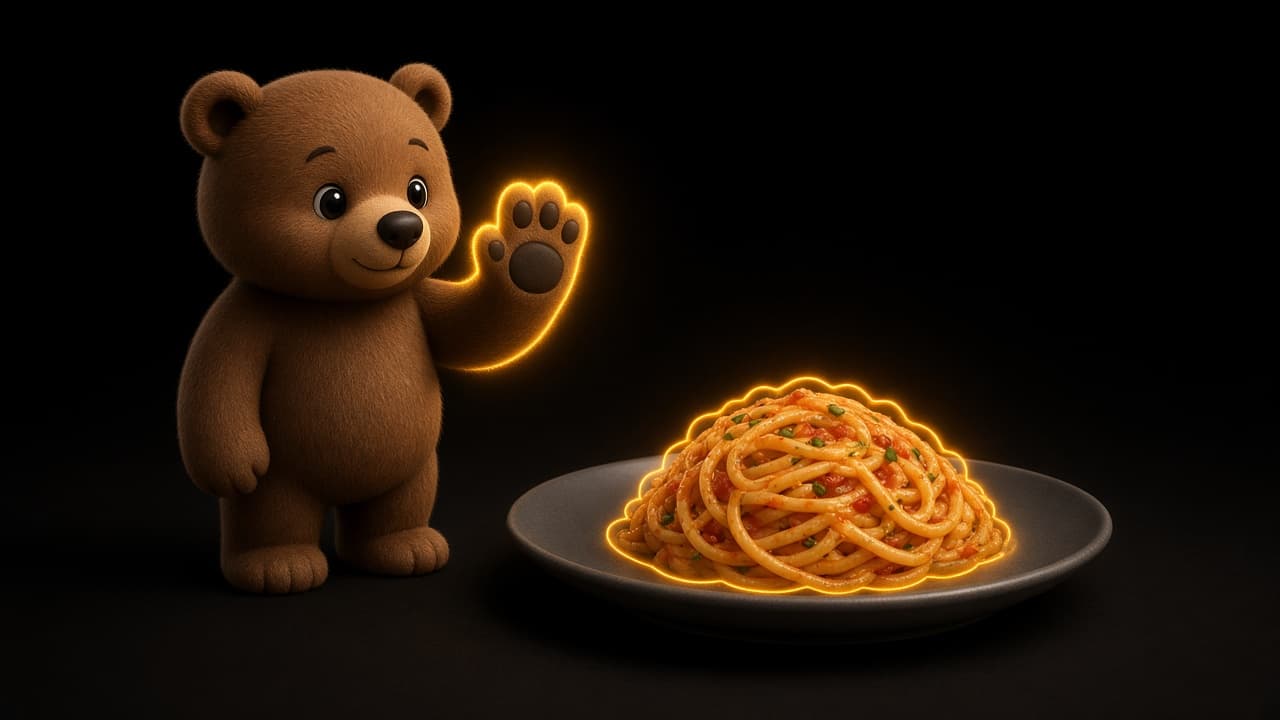
A food scale is the most accurate way to measure what you eat, but you won't always have one with you, and you'll never have one at a restaurant or a friend's dinner table. For everyday calorie tracking, that's less of a problem than it sounds. A reasonable estimate logged every day tells you far more than a perfect measurement you only take at home.
Here's how to get your estimates into the right range.
Portion vs. serving
A portion is how much food you actually put on your plate. A serving is the amount listed on a Nutrition Facts label. They're often different, and as the NIDDK points out, the serving size on a label is not a recommendation of how much to eat. When you log a meal, you're logging the portion.
Use your hand as a rough guide
Your hand is always with you, and it roughly scales with your body size. Treat the comparisons below as rough visual guides, not measurements. Hands vary a lot, so the results are approximate.
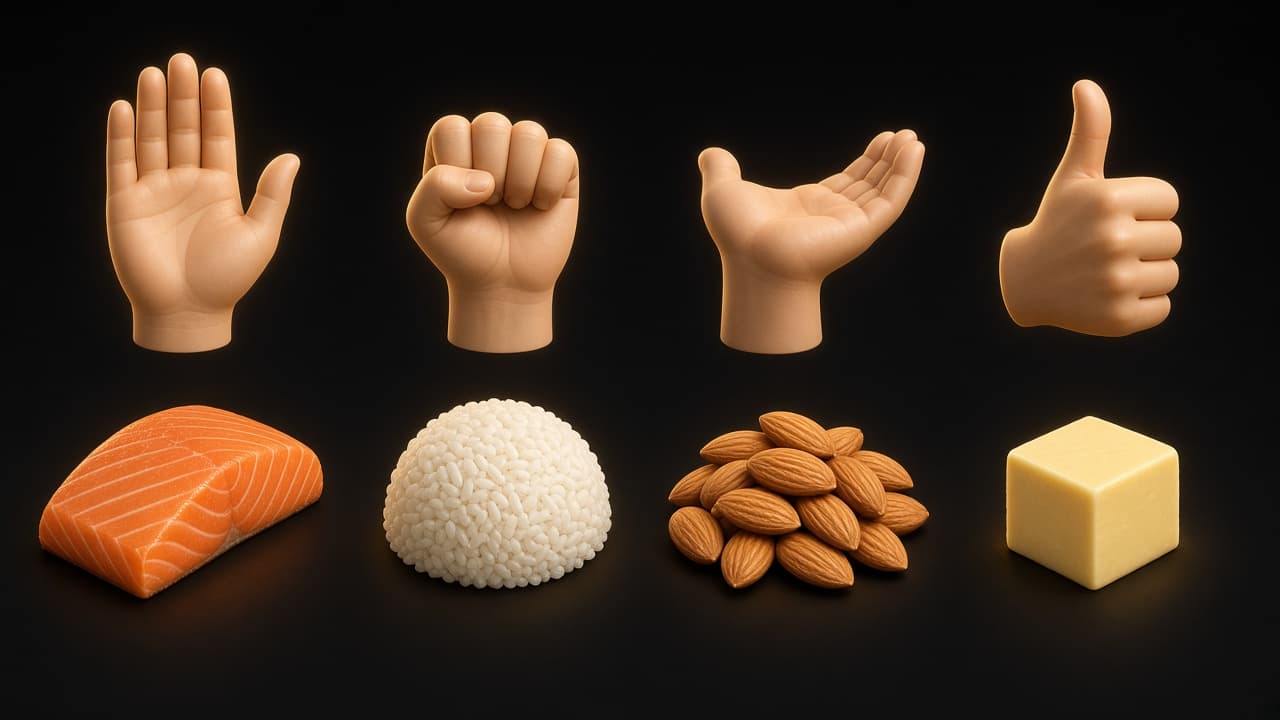
- Palm: a serving of meat or poultry is about the size of your palm.
- Fist: about one cup of chopped raw fruit or vegetables.
- Cupped hand: a rounded handful is about half a cup of cooked rice, pasta or snacks like chips and pretzels. A small handful of nuts or dried fruit is about a quarter cup.
- Thumb: a handy reminder for small amounts of dense, high-fat foods like butter, cheese or nut butter. If a dollop is bigger than your thumb, log it as more than a little.
The palm, fist and handful comparisons come from MedlinePlus, the health encyclopedia of the US National Library of Medicine. Use them to sanity-check a portion, then log it in cups, pieces or grams.
Compare with everyday objects
If hands feel too vague, common objects give you a fixed reference. The same MedlinePlus guide uses these comparisons:
- Deck of cards: a serving of meat or poultry
- Baseball: one cup of chopped raw fruit or vegetables
- Tennis ball: half a cup of ice cream, or a medium apple or orange
- Golf ball: a quarter cup of dried fruit or nuts
- Ping-pong ball: two tablespoons of peanut butter
- Pair of dice: a serving of cheese
- Compact disc: a pancake or waffle
- Computer mouse: a medium baked potato
Learn your own plates and bowls
Calibrate against your own kitchen. Check once with a measuring cup how much your usual cereal bowl or pasta plate holds, and "a normal bowl" becomes a real number. A few more shortcuts:
- Count pieces whenever you can. Eggs, slices of bread, crackers and dumplings are easier to count than to estimate.
- Use the package. If you ate half a bag, the label already tells you what the whole bag contains.
- Serve onto a plate. Eating out of the box makes any estimate guesswork.
Restaurant portions
Restaurant meals are the hardest to estimate, partly because the portions are often bigger than what you'd serve at home. The NHLBI notes that in many cases, the amount of food on a restaurant plate has nearly doubled compared with a couple of decades ago.
- Check the menu first. Many chains list calories next to items, which gives you a solid starting point.
- Break the meal into parts. Log the protein, the side and the sauce separately instead of guessing at the whole plate.
- Compare with what you know. Hold each part of the plate up against your palm, fist or a familiar object before you log it, instead of logging "one restaurant meal".
- Round up for cooking fat. Restaurant dishes often include butter or oil you can't see, so a slightly higher estimate is usually the safer choice.
- Take half home. It's easier to log half a plate accurately than to guess how much of it you finished.
Sauces and oils: the hidden calories
The biggest estimating errors usually aren't the chicken or the rice. They're the fats around them. Fat has 9 calories per gram, more than twice as much as protein or carbs, so small amounts add up fast. A tablespoon of oil weighs about 14 grams and is almost pure fat, which puts it at roughly 120 calories. You can look up exact figures for specific oils in USDA's FoodData Central.
- Measure cooking oil with a spoon instead of pouring straight from the bottle. It's the one place at home where a measuring spoon pays off.
- Ask for dressing on the side so you can see how much you actually use.
- Look for shine. Glossy vegetables, fried rice and sautéed dishes almost always carry more oil than you'd guess.
- Don't forget drinks. Lattes, juice, soft drinks and alcohol all count, and they're easy to leave out.
If you want to understand why fat moves your totals so much faster than everything else, the beginner's guide to counting macros explains the calories-per-gram math.
How photo logging helps
Taking a photo is often faster than estimating by hand. In Bear Bite, the AI recognizes the foods on your plate, estimates portions and returns calories, protein, carbs and fat. You can then adjust the portion before saving.
That adjustment step is where the techniques above come in. If the app suggests one cup of rice and your fist says it's closer to two, change it. If you know the pan had a generous pour of oil that the camera can't see, search for the oil by name and log it as its own entry.
Shoot from above with the whole plate in frame, and log before you eat, while the full portion is still in front of you. For more on making photo logging stick, see how to keep a food diary habit past week two.
When it's worth weighing
You don't need to weigh food forever. The NIDDK suggests measuring only long enough to learn typical serving and portion sizes. A scale, or even a set of measuring cups and spoons, is still worth using in a few situations:
- When you're just starting. Weighing your usual foods for a few days trains your eye faster than any visual guide.
- For calorie-dense foods. Nuts, nut butter, cheese, granola and oil are where small misjudgments make the biggest difference.
- When your numbers stop making sense. If you log consistently but your results don't match what you expected, a week of weighing shows where your estimates drift.
- When you have a medical reason. If a doctor or registered dietitian has asked you to track intake precisely, follow their guidance rather than visual estimates.
A note on accuracy
Hand sizes, object comparisons and photo estimates are all approximate, and so are labels and food databases. That's fine for spotting trends: an estimate that's consistently a little off still shows you how your eating changes week to week. This article is general information, not medical advice. If you have a medical condition or specific dietary needs, talk to a doctor or a registered dietitian before changing how you eat.
Keep reading
 Bear Bite••3 min read
How to Keep a Food Diary Habit Past Week Two
Most people stop logging meals within a couple of weeks. Here's how to make calorie tracking small enough to survive busy days, travel and the occasional pizza night.
 Bear Bite••6 min read
How to Count Macros: A Beginner's Guide to Protein, Carbs and Fat
What protein, carbs and fat are, how many calories each gram provides, how to read macros on a food label, and how to track them without obsessing.

 Photo Wash••6 min read
How to Free Up iPhone Storage Without Losing Photos
Storage full doesn't have to mean deleting memories. See what's really using space on your iPhone, clear the clutter, and use iCloud Photos the right way.