
How to Tune a Ukulele: Standard GCEA, Low G and Baritone DGBE
Learn how to tune a ukulele to standard GCEA with a chromatic tuner, the difference between high G and low G, baritone DGBE tuning and why new strings drift.

A ukulele has only four strings, but it goes out of tune more often than most instruments, especially in the first days after a string change. With a chromatic tuner and a simple routine, tuning it takes well under a minute, and the odd-looking order of the strings quickly starts to make sense.
Standard ukulele tuning: G C E A
Soprano, concert and tenor ukuleles are normally tuned G C E A. Holding the ukulele in playing position, the strings run from the one closest to your face to the one closest to the floor:
- 4th string (closest to your face): G4
- 3rd string: C4, which is middle C
- 2nd string: E4
- 1st string (closest to the floor): A4
The 1st string is the same A above middle C that modern tuning is built around: 440 Hz, as defined in ISO 16. The standard tunings for each ukulele size are summarized in the ukulele article on Wikipedia, including the high G, low G and baritone variants covered below.
A popular way to remember the sound of the four open strings is the phrase "My dog has fleas", sung one syllable per string from G to A.
High G vs low G: what re-entrant tuning means
Look at the octave numbers above. The G string is G4, which is higher than both C4 and E4. So the strings don't go from lowest to highest in order: the pitch drops from the 4th string to the 3rd, then climbs again. This is called re-entrant tuning, and it's what gives the ukulele its bright, close-voiced chord sound. It's the default on most soprano and concert ukuleles.
Low G tuning drops that string a full octave, to G3. Now the strings run in order from low to high, which is called linear tuning. You get a deeper, fuller sound and a few extra low notes for melodies and fingerstyle arrangements. Low G is especially common on tenor ukuleles.
A few practical points:
- Chord shapes are identical in both tunings. Only the voicing of the chord changes, not where you put your fingers.
- Low G needs its own string. It's thicker, and often wound. Trying to tune a regular high G string down an octave leaves it floppy and buzzing.
- Low G tuning matches the top four strings of a guitar with a capo at the 5th fret, which is why guitarists often find it familiar.
Baritone ukulele: D G B E
The baritone is the largest common ukulele, and it uses a different tuning: D3 G3 B3 E4. These are exactly the same notes as the four thinnest strings of a guitar, and the tuning is linear, with no re-entrant string.
Because the notes are different, chord names change. The same finger shape that gives you a C chord on a soprano ukulele gives you a G chord on a baritone. If you also play guitar, the guitar tuning guide covers the same four notes in the context of all six strings.
How to tune a ukulele step by step
- Find a quiet spot. Nylon strings are quieter than steel ones, so background noise affects the reading more than you might expect.
- Open Struno and choose the ukulele mode, or the baritone ukulele mode if you play a baritone. For low G, use chromatic mode and tune the 4th string to G3; the other three strings stay the same.
- Pluck one string firmly with the pad of your thumb and let it ring. Ukulele notes fade quickly, so a clear single pluck reads better than a series of light ones.
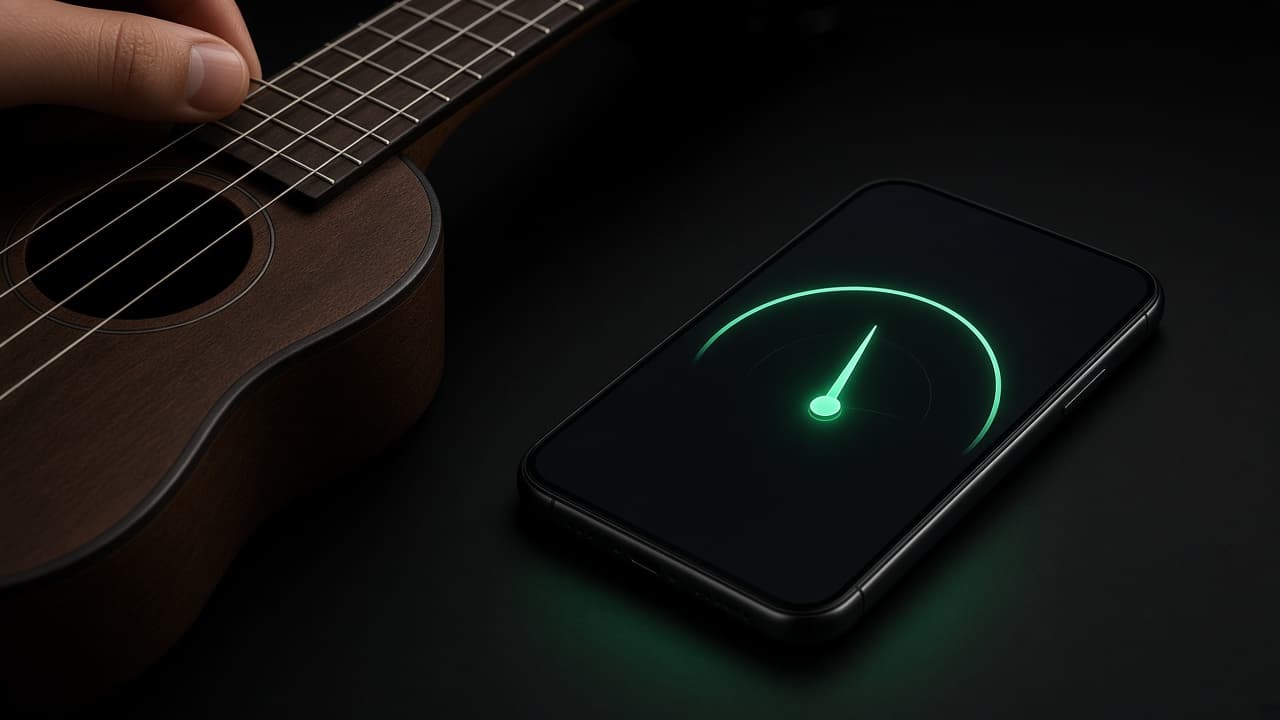
- Read the gauge. Left of center means the string is flat, so tighten it. Right of center means it's sharp, so loosen it.
- Tune up to the note. If you go past it, drop below and come back up. This keeps the string seated against the tuning gear, so it holds pitch longer.
- Make small adjustments. Many ukulele pegs move pitch a lot with a tiny turn, so turn a little, pluck, check, and repeat.
- Tune all four strings, then do a second pass. Adjusting one string can nudge the others, especially on a new set.
Double-check by ear
Once the tuner says everything is in tune, a quick fretted check confirms it:
- 3rd string (C) at the 4th fret should match the open 2nd string (E).
- 2nd string (E) at the 5th fret should match the open 1st string (A).
- In high G tuning, the 4th string (G) at the 2nd fret should match the open 1st string (A) at the same pitch. In low G, it's the same note one octave lower.
If two notes that should match sound wavy or beating, one of them is slightly off. If you'd rather tune by ear from the start, Struno's reference tone plays the target note so you can match each string to it.
Why new ukulele strings keep going flat
Nylon and fluorocarbon strings stretch far more than steel guitar strings. A freshly strung ukulele can drop out of tune within minutes, and it keeps drifting flat for several days of playing. That's normal, not a sign of a faulty instrument.
To speed up the settling:
- Retune often. Every time you pick up the ukulele in the first days, tune it before playing.
- Stretch the strings gently. Tune to pitch, then lift each string a little away from the fretboard along its length and let go. Retune and repeat a few times. Don't yank, and don't pull right next to the bridge.
Temperature and humidity also matter. Bringing a ukulele from a cold car into a warm room will detune it, so give it a few minutes to adjust before you reach for the tuner.
Common ukulele tuning mistakes
- Tuning the G string to the wrong octave. A chromatic tuner shows the octave, so check for G4 in standard tuning or G3 in low G. Forcing a high G string an octave higher than intended can snap it.
- Mixing up the string numbers. The 1st string is the one nearest the floor, not the one nearest your face. If the tuner shows an unexpected note, make sure you're on the right string.
- Tuning down to the note. Approaching from above leaves slack in the gear, and the string tends to slip flat soon after.
- Stopping after one pass. A second pass catches strings that moved while you tuned the others.
- Pressing too hard when you play. Squeezing the strings pushes fretted notes sharp, so chords can sound off even when the open strings are perfect.
Next step: play in time
A tuned ukulele is half the job. The other half is rhythm: strumming patterns and chord changes only sound like music when they're steady. Our guide on how to practice with a metronome shows how to build clean, even timing and gradually bring songs up to speed.
Keep reading
 Struno••3 min read
How to Tune a Guitar with a Chromatic Tuner: Standard and Drop D
A step-by-step guide to tuning a six-string guitar to standard EADGBE and Drop D with a tuner app, plus the habits that keep it in tune longer.
 Struno••6 min read
How to Practice with a Metronome and Actually Get Faster
A practical method for metronome practice: start slow, raise the tempo a few BPM at a time, use subdivisions and beats 2 and 4, and know when to speed up.

 Photo Wash••3 min read
How to Organize iPhone Photos by Country and City
Your iPhone already knows where most of your photos were taken. Here's how location data works, why some photos have none, and how to turn years of pictures into albums by place.